We welcome newborns, babies and children to our Eixample practice for visceral and biodynamic osteopathy sessions. A gentle practice, without harsh manipulations, adapted to the fragility of developing bodies.
We do not promise miraculous results. We work with listening, patience and the specific training required to support a body of a few weeks, months or years. Marina and Nicolas have been treating children since 2017 in Barcelona, with paediatric training that includes four years of practice in a Parisian maternity unit (Nicolas) and perinatal specialisation in France and the UK (Marina).
.
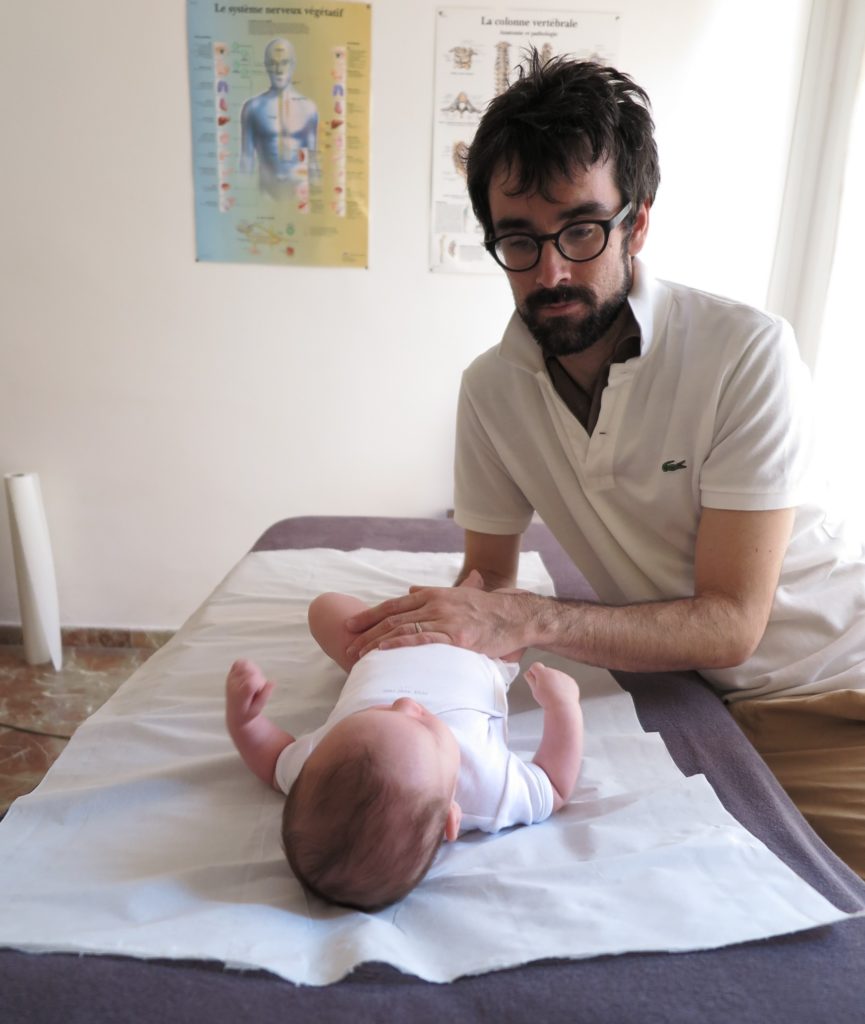
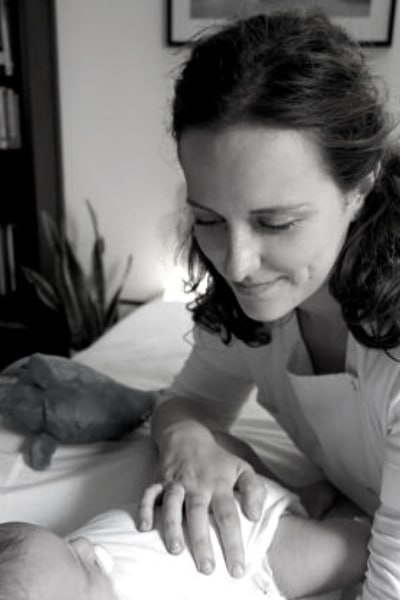
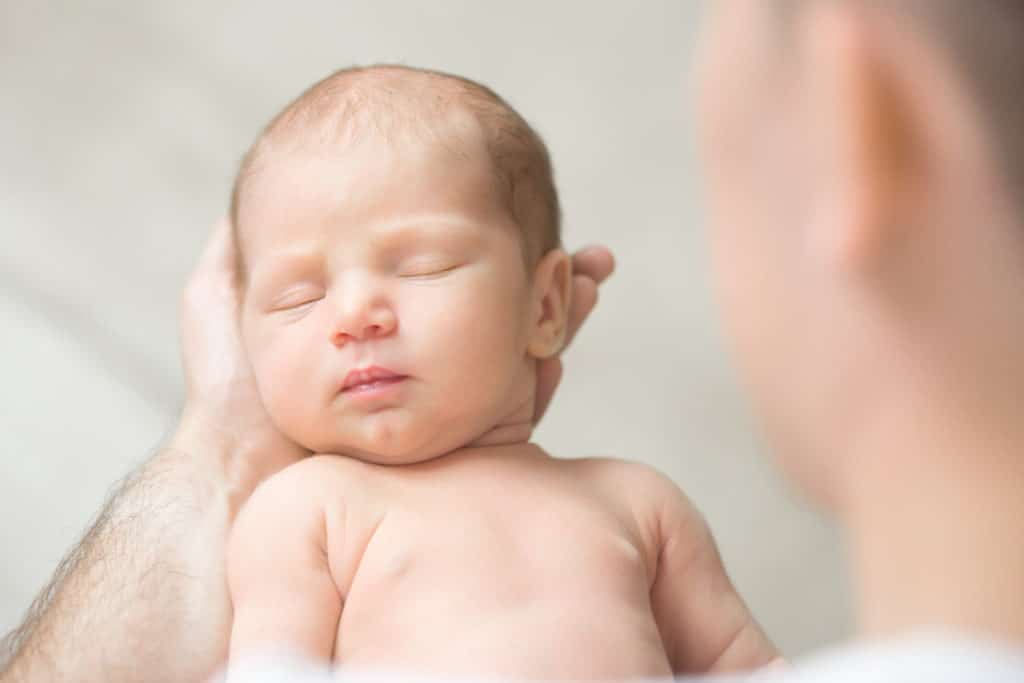
Three ages, three ways of working.
Newborns (0–3 months). The first few weeks after birth are a window in which the baby's body integrates the effort of birth. An early session can relieve cranial tension, difficulties with latching, postural asymmetries, or a persistent crying pattern.
Babies (3–24 months). This is the period where the most frequent queries appear: colic, plagiocephaly, sleep difficulties, reflux, postural torticollis. The work combines very gentle manual techniques with postural advice for parents at home.
Children (2–12 years). Falls, schooling, backpacks, screen posture, breathing patterns. Osteopathy supports musculoskeletal development and the balance of the autonomic nervous system, a stage of constant change.
Not all cries require an osteopath, and not all asymmetries are pathological. Some situations, however, clearly benefit from a session:
After childbirth — wide birth canal, forceps, suction cup, caesarean, rapid expulsion. A session in the first few weeks can release tension accumulated by the baby.
Infant colic — if the episodes persist, always occur at the same time or only calm down in an upright position. More information at our Colic page.
Plagiocephaly — when the baby always rests its head on the same side or when a flattening appears on the back of the head. The earlier it is worked on (ideally between 0 and 4 months), the easier it is. Details at Baby plagiocephaly page.
Sleep difficulties — Multiple awakenings with no identified medical cause, difficulty falling asleep. More in the Página sobre el sueño del bebé.
Heartburn and digestive difficulties Frequent regurgitation, persistent constipation, discomfort after feeds.
Postural torticollis The baby always turns their head to the same side, with difficulty turning to the other.
Sucking or feeding difficulties asymmetrical latch, feeding fatigue, no diagnosed anatomical cause (tongue tie ruled out).
In older children Back pain related to backpacks or posture, recurring headaches, after-effects of falls, postural problems detected by the paediatrician or dentist.
If you have a specific query about your child's situation, we can guide you by phone before booking an appointment.
Absolutely, it is safe. Paediatric osteopaths are specially trained to work with children, using gentle techniques adapted to their developing bodies.
Yes, osteopathy can be effective in the treatment of sleep problems, helping to regulate a child's sleep patterns and promote a more restful night's sleep.
It is recommended in several cases, such as motor development problems, postural imbalances, minor trauma and respiratory problems.
The number of sessions varies according to the child and the condition being treated. Some children may experience improvement after only a few sessions, while others may need longer treatment.
We practise tissue and biodynamic osteopathy. This means: very light pressure, listening to the tissues, with no sudden movements or “cracking”. It is the only reasonable approach for a developing body.
A session with a baby lasts between 30 and 45 minutes, depending on their tolerance. The baby can be held, lying down, feeding – whatever is most comforting. Parents are present at all times and participate in the observation.
We do not perform cervical manipulations with thrust on children. We do not treat beyond our competencies: if a situation requires medical consultation or referral to a paediatrician, we state this clearly.
After the session, we give practical advice for home: positions, gestures, signs to look out for. We work in complementarity with the paediatrician, not in substitution.
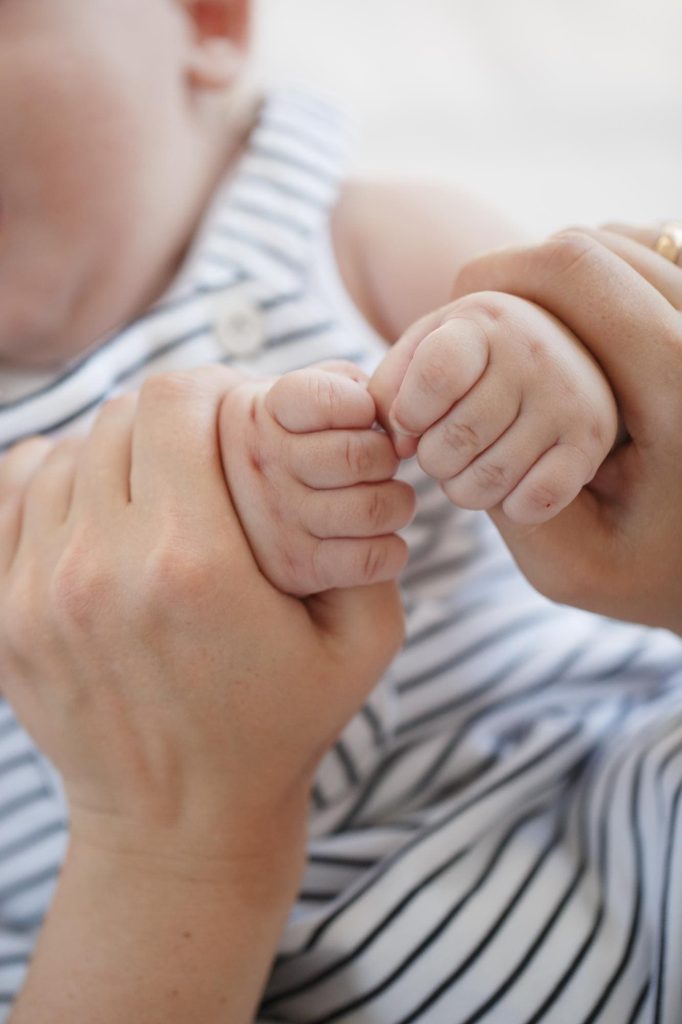
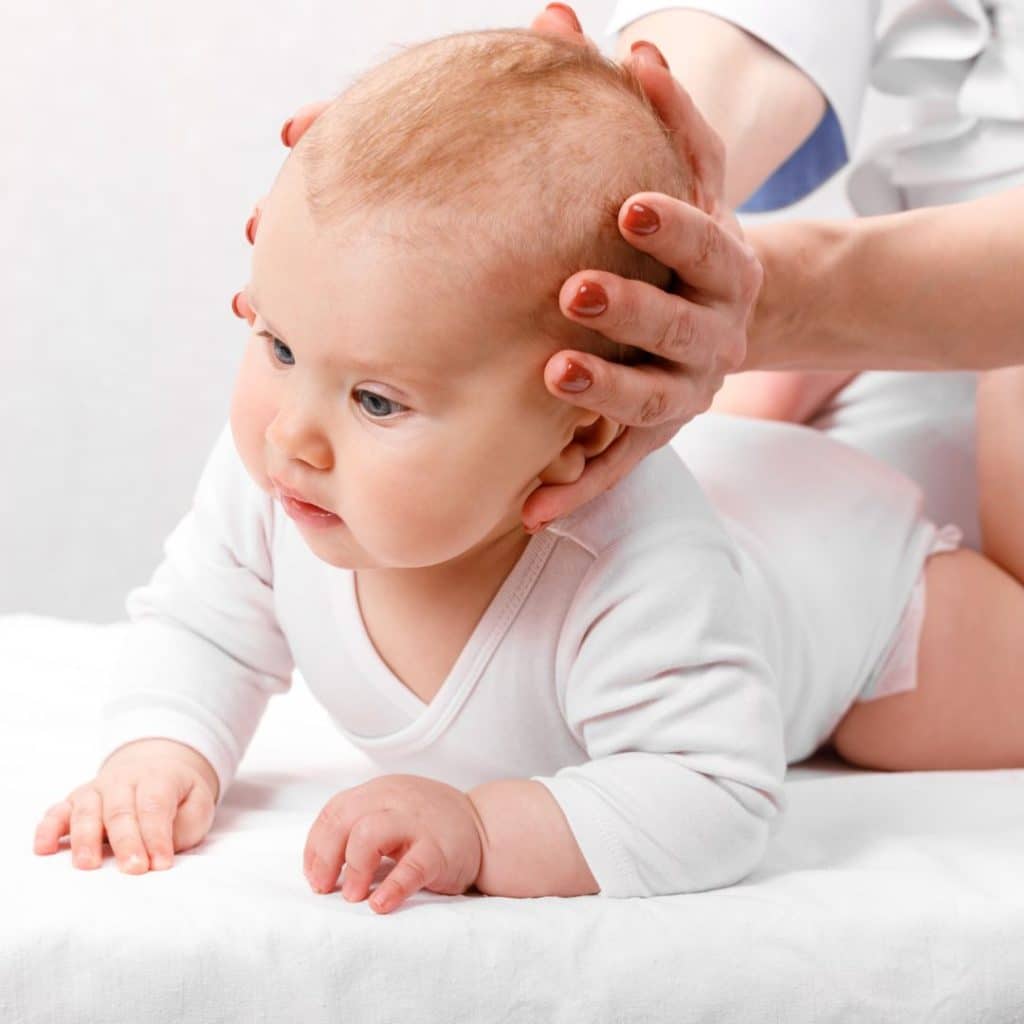
In child health, knowing who you are consulting is essential. Here is our specific training with babies and children.
Marina He completed the six-year official training at CETOHM ISO Paris Est (France), recognised by the French state. He then specialised in perinatal care with A. Morgan, DO, in the UK, in newborn care with Eric Simon and Dany Heintz (France), and in biodynamic osteopathy with B. Josse for three years.
Nicolas She completed the same six-year official training in France. She worked for four years in a Parisian maternity hospital, caring for newborns in their first few days of life. She trained in tissue techniques with P. Tricot and in approaches to babies and children with E. Simon, as well as in biodynamic osteopathy.
We are members of the Spanish Register of Osteopaths (ROE).
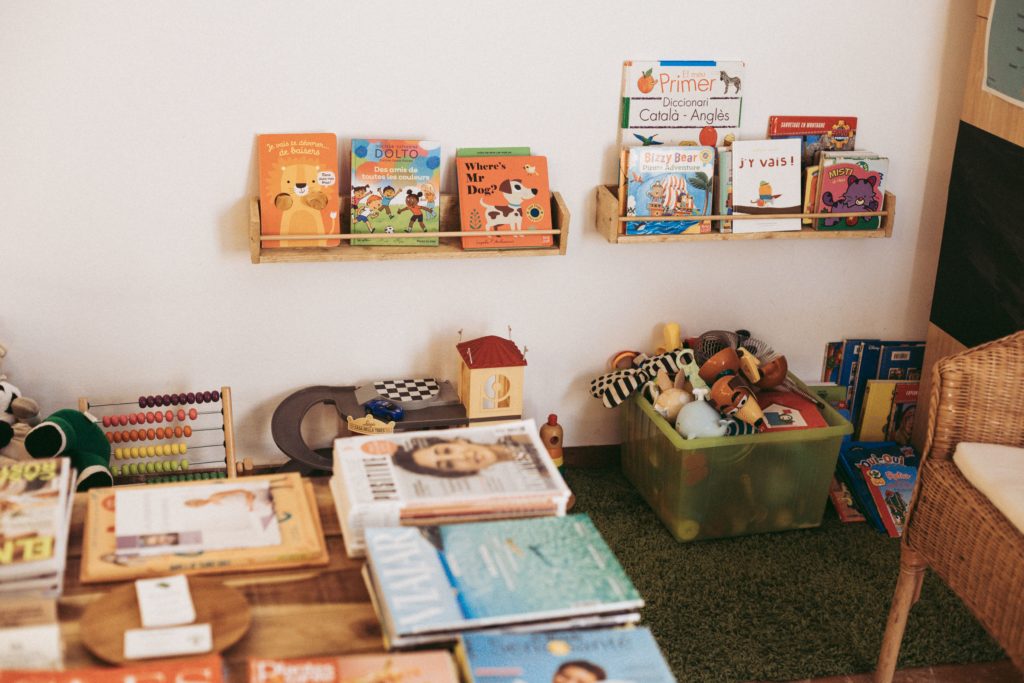
Our office is at Carrer del Consell de Cent 217, in the Eixample, a five-minute walk from Plaça Universitat. It is a space designed with families in mind:
Baby rocker, with soft materials
Hammock and changing table available
Lactation room for mothers
Play and reading area for older siblings
Lift for going up with a pushchair
Air conditioning and water feature
The cabinet is recommended by Mammaproof and by the breastfeeding association Aunt and Aunt