We welcome women at any stage of their motherhood journey – from trying to conceive to the postpartum period – at our clinic in the Eixample. We practice a gentle and respectful tissue and biodynamic osteopathy for a body that is undergoing profound changes.
We do not promise a perfect birth or a pregnancy without discomfort. We support what the body needs at each stage: releasing tension, gaining mobility, finding comfort, preparing for the birth day, and reorganising afterwards.
Marina and Nicolas, who specialise in perinatal care, have been treating pregnant women for over fifteen years, with specific training acquired in France and the United Kingdom.
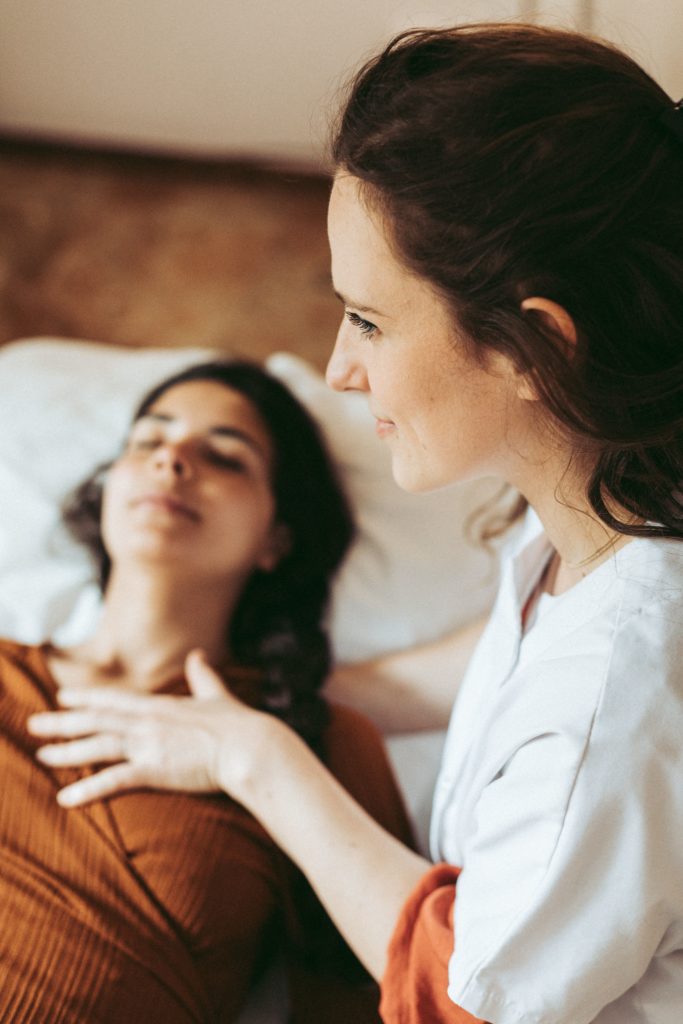
Before pregnancy — preconception. When there is a desire for pregnancy or difficulties in conceiving, osteopathic preparation can be helpful. We work on pelvic mobility, the balance of the digestive system, the diaphragms and the regulation of the autonomic nervous system. More details in our Page on how to get pregnant.
During pregnancy. The nine months transform the body rapidly. The centre of gravity shifts, the pelvis prepares, the organs move. One session per trimester allows for these changes to be monitored and to alleviate the discomfort that arises: lower back pain, sciatica, neck tension, digestive heaviness.
Antenatal classes. Over the last few weeks, we've been working on pelvic mobility and diaphragm balance. The objective is not to «guarantee» an easy labour — no professional can promise that — but to leave the body in the best possible condition for the day of the birth. More in our Página sobre la preparación al parto.
Postpartum. The weeks and months following childbirth leave traces that are rarely talked about: abdominal diastasis, lower back pain, neck tension from breastfeeding, a disorganised pelvic floor, and caesarean or episiotomy scars. One or two sessions help the body to reorganise itself.
Carrer del Consell de Cent, 217 08011 Barcelona. Mezzanine 2.
- Urgell (L1)
- Universitat (L1/L2)
During pregnancy, the most common discomforts encountered in consultations are:
Lower back pain and sciatica. They mostly appear from the second trimester onwards, when the pelvis begins to widen and the baby puts pressure on certain nerve structures. More details in our Pregnancy sciatica.
Pubalgia. Pain in the pubic symphysis that appears when walking or changing position. Frequent in the third trimester.
Cervical tension and headaches. Related to changes in posture and sometimes with fluid retention.
Digestive discomfort. Reflux, sluggish digestion, constipation. All of this linked to the displacement of the organs.
Carpal tunnel syndrome. Tingling or loss of strength in the hands, common in the third trimester.
General feeling of tension or exhaustion. When one feels the body trapped or overwhelmed by the changes.
In the postpartum period, the most common reasons are: lumbar and pelvic pain, abdominal diastasis, cervical tension due to breastfeeding, a feeling of a disorganised body, and physical consequences of a difficult birth (caesarean section, forceps, vacuum, prolonged expulsion phase).
.
We practise a soft tissue and biodynamic osteopathy. That is to say: very gentle pressure, listening to the tissues, with no abrupt manipulations or «cracking». Suitable for pregnancy from the first day to the last.
During the session, we place you in the most comfortable position possible: in a lateral recumbent position if the pregnancy is advanced, seated, or semi-reclined. The duration is from 45 minutes to 1 hour.
We do not perform sudden spinal manipulations on pregnant women. We do not treat beyond our competence: if a clinical situation requires a medical, gynaecological or midwife consultation, we state this clearly. We work in complementarity with your medical team, not as a replacement.

When it comes to health during pregnancy, knowing who you're consulting is essential.
Marina She completed the six-year official training at CETOHM ISO Paris Est (France), recognised by the French State. She subsequently specialised in care for pregnant and postpartum women with A. Morgan, DO, in the UK, and in biodynamic osteopathy with B. Josse for three years. She has been treating pregnant women for over fifteen years.
Nicolas she also cares for pregnant and postpartum women. Her paediatric training brings a complementary perspective on the mother-baby dyad.
Both are members of the Register of Osteopaths of Spain (ROE).

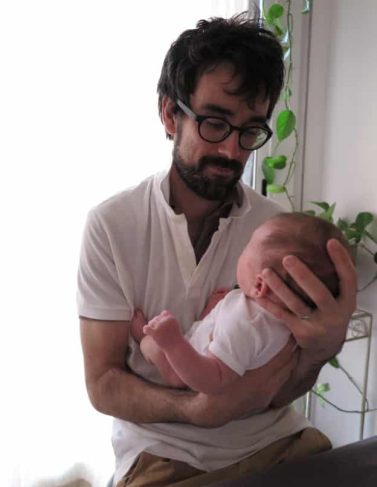
Marina and Nicolas, both parents and experienced osteopaths, cordially invite you to their practice to discover the benefits of prenatal and postnatal osteopathy.
With a deep understanding of the importance of these periods in a woman's life, they are dedicated to providing specialised and personalised care.
70€
Yes, it is safe. Osteopathy is a gentle and non-invasive manual therapy, suitable for pregnant women. Osteopaths are trained to treat pregnant women with specific techniques that are safe for both the mother and the baby. We avoid abrupt manipulations and favour gentle osteopathy.
Osteopathy helps relieve back pain by adjusting postural imbalances and reducing muscle tension. It also works to improve mobility and alignment of the body, which is especially important as the body changes during pregnancy.
The frequency of visits varies according to individual needs. Generally, it is recommended to start with regular sessions and then adjust according to how the patient feels and the evolution of her pregnancy.
As well as relieving specific aches and pains, osteopathy can improve circulation, reduce stress and anxiety, and help in the management of pregnancy-related digestive changes. This contributes to overall well-being during this special time.