What is osteopathy? A holistic approach practiced in Barcelona
Introduction
If you are looking for a solution to relieve pain, stress or functional issues, you may have already heard of osteopathy.
But… what exactly is osteopathy, and how can it help you?
Osteopathy is a holistic hands-on approach that seeks to understand how the body functions as a whole. In our clinic in Barcelona, we practise gentle and precise osteopathy to help the body restore long-term balance.
What is osteopathy and where does it come from?
Osteopathy was born in the United States in the late 19th century. It was created by Andrew Taylor Still, who developed this concept after extensive research and numerous questions about health and life.
His personal history was marked by the deaths of those closest to him (his wife and four of his children), events which prompted him to seek new ways of healing.
The principles of osteopathy: our approach
«The doctor treats, nature heals.
Hippocrates
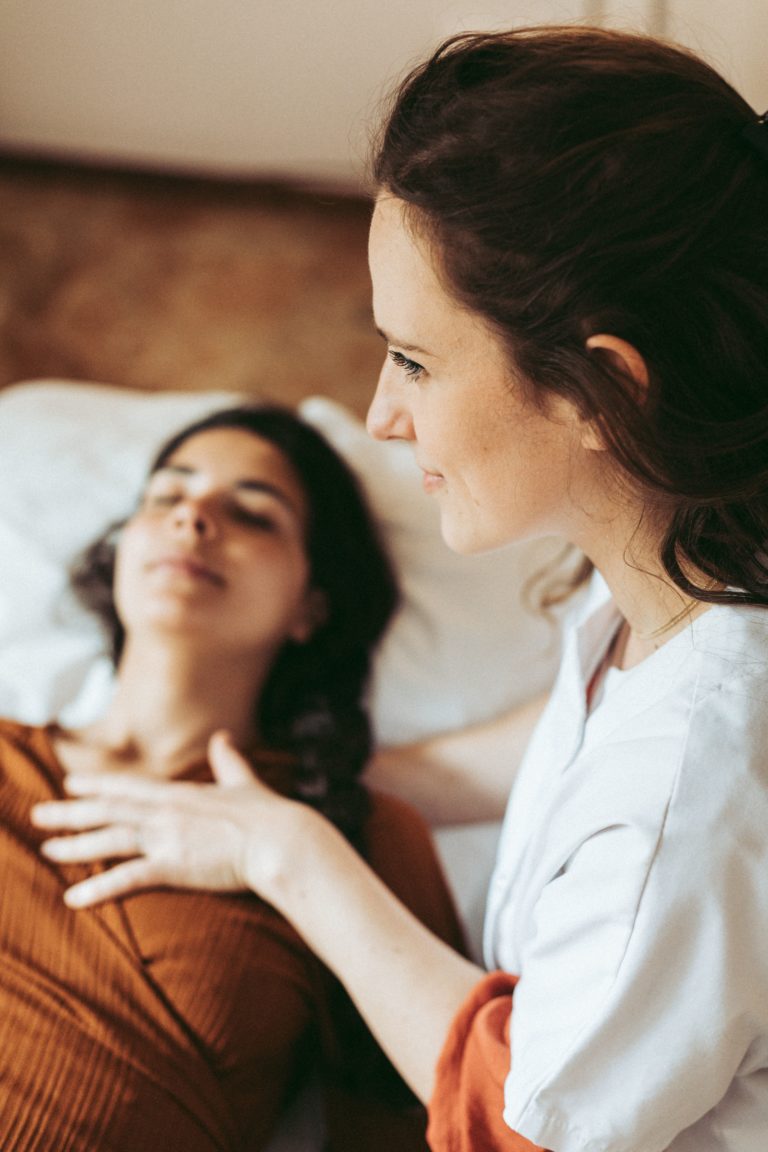
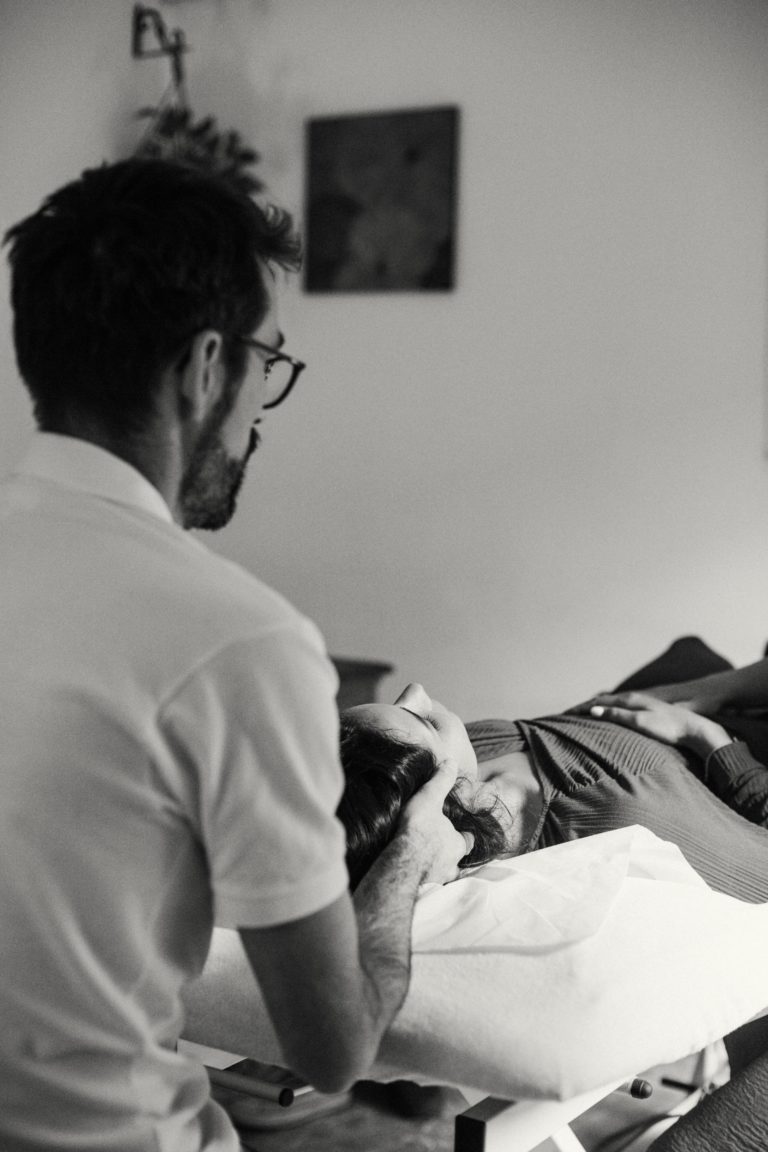
The osteopath accompanies the tissues with his hands to allow the body to harmonise.
It is based on several principles:
- the hand, our only tool for analysis and treatment
- the notion of the globality of the individual (the body is one)
- the interdependence between structure and function
- the body's self-regulation
Our lifestyle, repetitive movements, stress, trauma of all kinds, emotional shocks, psychological and nervous tensions are often the cause of so-called "functional" pain.
Osteopathy is effective in treating this type of functional tension and is in no way intended to treat organic pain, that is to say, pain associated with established medical conditions.
Osteopathy allows for the rebalancing of the body's different systems, often in relation to the vertebrae, either alongside or independently of medical treatment. For this reason, we treat the areas from which the pain originates, rather than necessarily the painful areas themselves.
«Osteopathy is a science, an art, and a philosophy.
A.T. Still (Autobiography p. 136)
Why traditional osteopathy?
«Only the living tissues of the body know the truth.
R. Becker
We want to remain true to the principles of the founders of osteopathy, especially those of A.T. Still, W.G. Sutherland and R. Becker.
Osteopathy is a traditional medicine based on precise anatomical knowledge and a holistic philosophy. It is based on a global view of the human being (body, soul, spirit) and not solely on a mechanical view.
Once osteopathic treatment is completed, the body can continue to self-regulate.
Allow the inner vital function to manifest its unfailing power, rather than applying blind force from the outside.
W. G. Sutherland, La Coupe crânienne, 2002, p. 115.
Our therapeutic contract with the patient
Our aim is to restore the overall balance of the organism, called homeostasis.
Our desire is to allow the body to self-regulate. The quality of our work as osteopaths depends on our ability to release deep tensions that hinder this self-regulation. We are interested in anything that can unbalance the human body and we opt for thorough exploration.
We work closely with other therapists, particularly psychotherapists (mainly of the Gestalt approach) because it often seems that the deepest and most persistent tensions in the body have emotional origins (unconscious emotions, often related to the patient's experience).
We provide systematic advice on lifestyle, supplements, physical exercise, and post-session stretching.
It goes against our personal code to conduct osteopathic sessions on the same patient every month for the same problem or pain. Our aim is to achieve patient autonomy and responsibility. However, initially, in some particular cases (such as acute pathologies), it is necessary to see the patient for regular follow-up.
Our aim is for the patient to gain independence.
Osteopathy is a therapy that is fundamentally oriented towards prevention.
We recommend consulting with an osteopath 2 or 3 times a year to prevent the onset of tensions and adaptations, rather than only doing so in cases of severe pain, which would require more work and therefore more sessions.
Frequently asked questions
After an osteopathic session the body does a "reset", sometimes the pain increases or the area changes.
It is like a zip that sometimes has to be closed to be opened again.
The pain is usually muscular after a session, as it often needs time to relax, especially if the blockage/pain has lasted for a long time.
Sometimes it takes two sessions to see results, but in most cases the pain disappears or is reduced 48 hours after the session.
Fatigue is perfectly normal.
The relaxation of the neurovegetative nervous system often results in a great need for rest after the session.
It is also important to remember that a movement requires a lot of energy, so all the adjustments we make during a session that seem so gentle will push the body to readjust in a very deep way, so it will take energy from your body.
So, ¡get some rest!
Our vision of health means that we are opposed to seeing people every month. This goes against our philosophy.
Most patients feel much better after the first session and have no more pain after the second session.
During your session, we will systematically give you our point of view on the number of sessions to be carried out: it is our therapeutic pact, our commitment to you. If necessary, we will give you a new appointment directly.
In some cases of various and/or major pains, we will probably need more sessions more or less spaced out over time depending on what we notice in the body.
Our experience shows that 2 to 3 sessions are needed to completely balance the system.
We advise pregnant women to attend from the third month of pregnancy, and then in the seventh or eighth month, depending on their needs.
The first session is usually the one that allows us to "prepare the body" for pregnancy and the changes it entails. The second session is the preparation for the birth. We check that everything is in order, especially the pelvis, in preparation for a vaginal birth.
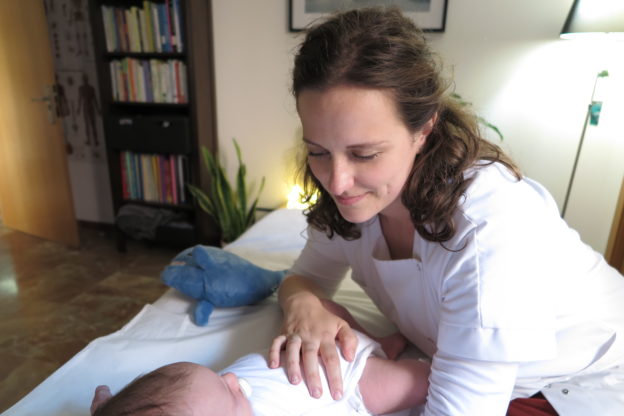
We advise young parents to bring their newborns as soon as possible after birth. Ideally within the first two weeks of life.
For young mothers, it is better to wait 40 days after the birth to go for a consultation. EXCEPT in the case of severe pain: coccyx, lumbar or stomach pain.
Osteopathy is a valuable aid in parallel to many medical treatments: treatment of insomnia, depression, thyroid disorders, blood pressure disorders, migraines etc.
In the case of chemotherapy or radiotherapy treatments, osteopathy is an important and highly recommended ally.
We do not recommend that patients attend a session if they have an infection with or without fever, and we recommend that parents wait a few days to make an appointment after vaccinating infants and children.
Osteopathy is a form of alternative medicine that emphasises manual, non-invasive treatment of the human body to improve health. It was founded in 1874 by Dr. Andrew Taylor Still in the United States, based on the premise that all bodily functions are interconnected and the musculoskeletal system plays a fundamental role in health and disease.
What is osteopathy?
Osteopathy is based on techniques of manipulation and mobilisation of various parts of the body, especially the musculoskeletal system. Osteopaths use their hands to diagnose, treat and prevent a wide range of health problems. They create a personalised approach for each patient, considering the relationship between body, mind, and spirit, and looking for the root cause of health problems rather than just treating the symptoms.
What is osteopathy for?
Osteopathy is used to treat various conditions, including:
- Muscle and joint painSuch as back pain, neck pain, sciatica, and joint problems such as arthritis.
- Posture problemsDue to muscle tension, muscular imbalances or bad working and daily posture.
- Sports injuriesHelping to regain function and mobility after injuries.
- Digestive problemsSuch as constipation and irritable bowel syndrome.
- Headaches and migrainesThrough manipulation of the muscles of the neck and head.
- Stress-related complicationsIncluding sleep disorders and chronic fatigue.
- Pregnancy-related problemsTo relieve back pain and prepare the body for an easier birth.
In addition to these treatments, osteopathy is also used as a preventative approach to maintain general wellbeing and prevent health problems before they start. By improving the functioning of the body and helping to maintain balance and harmony, osteopathy can be a valuable tool for improving overall quality of life.