
Bruxism in Barcelona: natural relief for jaw tension with gentle osteopathy
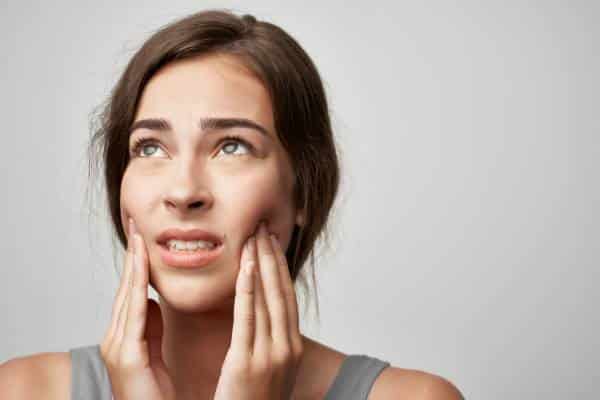
You wake up with a stiff jaw. Or with a headache in your temples, almost always first thing in the morning. Sometimes it's your partner who tells you that you grind your teeth at night. Other times it's the dentist, who spots the worn enamel before you notice a thing.
At our Eixample clinic we see quite a few people like that. They come in with neck pain, headaches, a jaw that doesn't open the same way anymore. And very often the bruxism has been there for years.
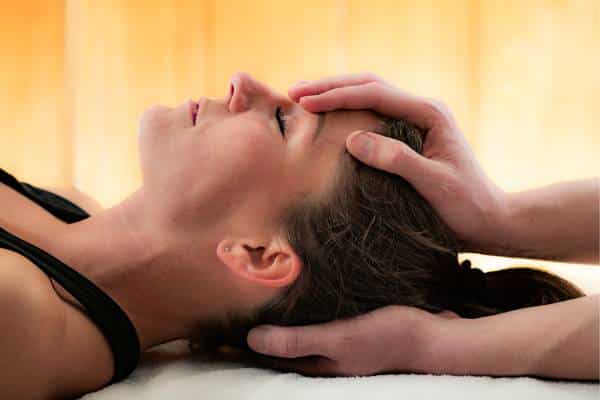
We work with tissue and biodynamic osteopathy: very gentle pressure, listening to the tissues, no forceful manipulations
What is it exactly?
Clenching or grinding your teeth when you're not eating or talking. That's it. It's not a disease, it's a muscular behaviour, and on its own there's nothing unusual about it. The problem starts when it goes on night after night for months.
Nocturnal bruxism happens while you sleep and you don't even realise. Daytime bruxism is different: it's that clenching that occurs when you're concentrating in front of the computer or dealing with a stressful situation. A lot of people recognise it as soon as you mention it to them

Where are you from?
Almost never from a single thing. Sustained stress weighs heavily, that's clear. But there is also bruxism associated with sleep disorders, particularly apnoea. Certain medications encourage it. Occlusal problems also count. And there are entire families where several members clench.
The fact that the origin is multiple explains why no single treatment completely resolves it.
Start with the dentist
We always say this, even if it means you won't come and see us.
Bruxism is, first and foremost, a dental matter. Your dentist is the one who assesses the wear, rules out a bite problem and decides whether you need a bite guard. The guard doesn't make you stop clenching, but it protects your teeth, and in that respect nothing can replace it. Nor can we.
If you also snore loudly, stop breathing during the night, or spend the day feeling sleepy, speak to your doctor. Apnoea could be behind it.
What we do, and what we don't
We don’t cure bruxism. There is no solid evidence that osteopathy can eliminate it, and to tell you otherwise would be to sell you a pipe dream.
What we can do, however, is work on the tension that bruxism causes and which often fuels it. The masticatory muscles, the neck muscles, the temporomandibular joint, the diaphragms. All these areas become increasingly tight over the months and respond quite well to gentle manual therapy.
We also look at the autonomic nervous system, which in these people is often in a constant state of alert, and the postures that cause tension without you realising it: a screen that’s too low, holding your mobile against your shoulder, the way you sleep.
The aim is for you to be more comfortable and for the area to regain mobility. It is not to correct bruxism
What is the session like?
Between forty-five minutes and an hour.
First, we ask questions. We find out how long it’s been going on, at what times of day, what makes it worse, and how you sleep. Then we assess the jaw, the skull and the neck, because a tense jaw is almost never an isolated issue.
If it’s appropriate for you, we can use intraoral techniques. They’re gentle, they don’t hurt, and we’ll explain them to you before we start. You can say no, either at the start or halfway through the session, and that’s fine.
We do not carry out abrupt cervical manipulations.
At the end of the session, we usually give you two or three jaw-stretching exercises to do at home. They take five minutes a day.
We don’t work alone
When it comes to bruxism, what works is having various professionals look at the same thing from different angles. We regularly collaborate with dentists, physiotherapists and psychotherapists.
If your situation requires something that’s not within our remit, we’ll let you know. And we don’t give advice on medication or supplements: that’s a matter for your doctor, dentist or pharmacist.
Questions about bruxism
It depends. We’ll start with one and assess it together. If you don’t notice any difference by the second or third attempt, we’ll let you know and look for another approach. There’s no point in dragging it out just for the sake of it.
Yes, because they are different things. The splint protects the teeth. We work on the muscle and the joint. They get on well together.
That may well be the case, as tension in the jaw and neck affects structures very close to the ear. However, tinnitus has many causes and needs to be assessed, usually by an ENT specialist. We do not treat it.
In children, it is usually temporary and linked to teething. The first step is to see a paediatric dentist.